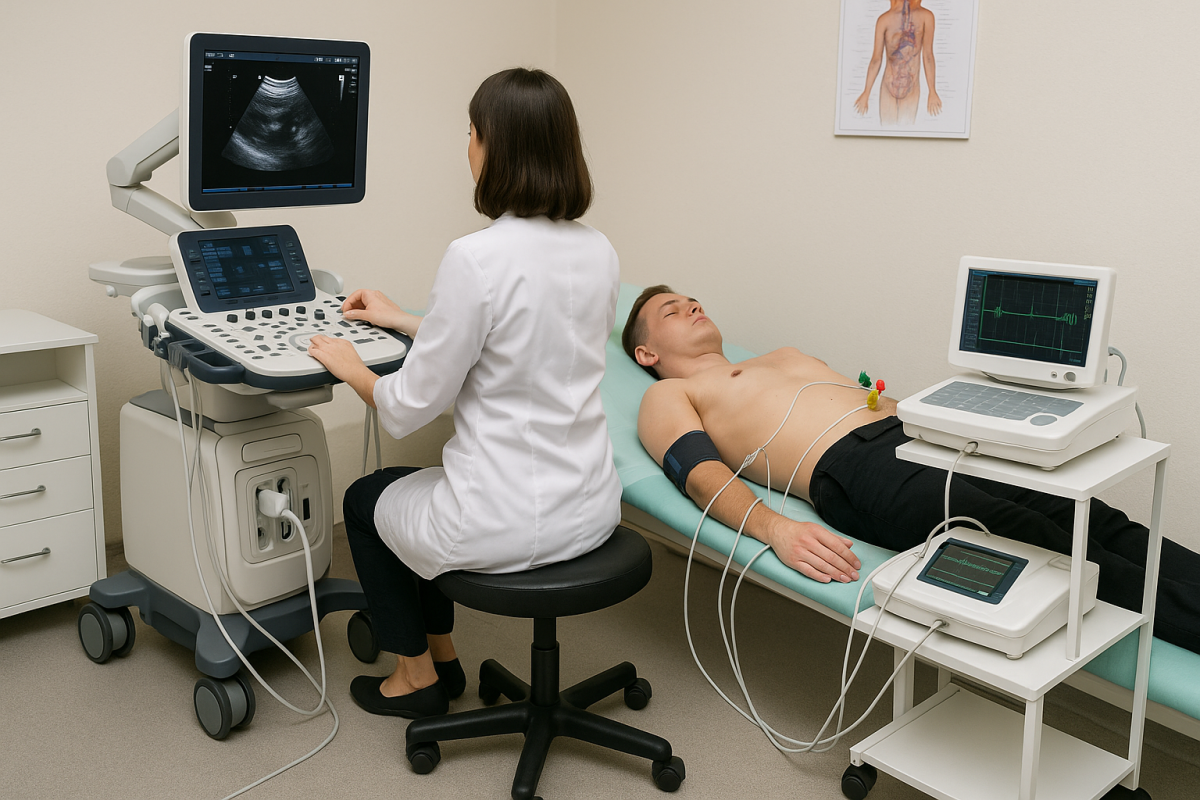
Diagnostics: Ultrasound, ECG, Holter
Diagnostics as the basis of safe rehabilitation and prevention of complications
Modern rehabilitation is impossible without high-quality diagnostics. Before starting recovery after stroke, myocardial infarction, joint replacement, spinal injuries, femoral neck fracture, traumatic brain injury or complex operations on internal organs, the doctor must clearly understand the condition of the patient’s cardiovascular, nervous and musculoskeletal systems, as well as internal organs. It is the results of examinations that make it possible to form a rehabilitation program that will be not only effective, but also safe.
Diagnostics helps not only to confirm or clarify the main diagnosis. It makes it possible to detect comorbid conditions, assess the risk of complications, and determine the level of load that a patient can receive at the stage of recovery. Thanks to this, the doctor can avoid excessively intensive procedures, adjust drug therapy, choose the optimal pace of rehabilitation and respond in time to changes in well-being.
Regular monitoring during the course of treatment is no less important than the initial examination. Control of blood pressure, heart function and laboratory parameters makes it possible to assess how the body responds to the prescribed therapy and, if necessary, change the rehabilitation plan without bringing the situation to exacerbations and undesirable consequences.
- Initial examination — forms the starting picture of the state of health.
- Intermediate control — allows you to track the effectiveness of treatment.
- Repeated diagnostics after the end of rehabilitation — confirms the achieved result and helps to plan further follow-up.
Basic methods of instrumental and laboratory diagnostics
To assess the patient’s condition, a combination of instrumental and laboratory methods is used. Ultrasound, ECG, various types of heart and blood pressure monitoring, X-ray, CT, MRI and laboratory tests — each of these methods gives its own part of information. Together they form a complete picture of how the body functions.
Ultrasound examination (US) makes it possible to assess the condition of internal organs, blood vessels and soft tissues in a painless and safe way. Doppler ultrasonography of the vessels of the head and neck helps to detect disorders of blood supply to the brain, which is especially important after stroke and in chronic vascular diseases. Holter monitoring of blood pressure and electrocardiogram makes it possible to record fluctuations throughout the day, in real-life conditions of the patient.
Laboratory tests of blood and urine help to assess inflammatory processes, blood clotting, lipid profile, blood sugar level and other indicators that influence the course of the disease. X-ray examination is used to assess the condition of bones and joints, while CT and MRI provide detailed visualization of the brain, spine and internal organs.
- Ultrasound, Doppler ultrasound of the vessels of the head and neck.
- ECG, 24-hour ECG and blood pressure monitoring (Holter BP).
- Laboratory tests of blood, urine and other biological fluids.
- X-ray, computed tomography (CT), magnetic resonance imaging (MRI).
Comprehensive diagnostics at the «Graal» clinic
At the «Graal» clinic, the diagnostic stage is considered a key part of the patient’s journey. Doctors do not limit themselves to a single examination, but form an individual diagnostic plan depending on complaints, medical history, previous injuries or surgeries. This makes it possible to avoid random findings and at the same time not miss important details.
The patient’s pathway is built in such a way that the necessary examinations are carried out consistently and logically: first basic tests (laboratory analyses, ECG, blood pressure measurement), then — if necessary — advanced imaging (US, CT, MRI). Based on the examination results, specialists create a single picture of the state of health and coordinate a treatment and rehabilitation plan.
It is important that at «Graal» attention is paid not only to organic changes, but also to functional state: endurance, tolerance to loads, particularities of recovery after exercises or procedures. This allows doctors to dose rehabilitation measures more accurately and to predict how the body will react to them.
When deeper examination is needed
Diagnostics is necessary not only after serious events such as stroke or surgery. Often, repeated symptoms that the patient tends to ignore become a signal for examination: periodic headache, dizziness, irregular heartbeat, shortness of breath during exertion, sudden increase in blood pressure, pain in the back or joints.
People with chronic cardiovascular diseases, diabetes, excess body weight and a sedentary lifestyle should be especially attentive to their condition. For them, planned examinations are a way to prevent complications and adjust treatment in time, instead of waiting for an acute condition to develop.
- Consult a doctor when new symptoms appear or usual symptoms become more intense.
- Discuss the need for instrumental and laboratory diagnostics.
- Undergo the recommended examinations and keep the results for further monitoring.
Advantages of ultrasound and functional diagnostics at «Graal»
At the «Graal» clinic, special attention is paid to ultrasound and functional examination methods, as they provide a great deal of important information in a painless way and with minimal burden on the body. Ultrasound of abdominal organs, thyroid gland, heart, vessels, as well as Doppler study of the vessels of the head and neck help to assess the structure and blood supply of tissues.
Twenty-four-hour monitoring of ECG and blood pressure makes it possible to track how the heart and blood vessels work in everyday life, and not only during a short visit to the doctor’s office. This is especially important for patients with suspected arrhythmias, unstable blood pressure or coronary heart disease.
- Modern equipment for ultrasound and functional diagnostics.
- Experienced specialists who know how to combine examination data with the clinical picture.
- Careful attitude to patients with pain and limited mobility.
The results of ultrasound and functional examinations at «Graal» are not used in isolation, but as part of a comprehensive approach to treatment and rehabilitation. On their basis, physiotherapy procedures, loads during therapeutic exercise and lifestyle recommendations are adjusted.
How to prepare for diagnostic procedures
Proper preparation for an examination increases the informativeness of the results and reduces the risk of repeated procedures. Before laboratory blood tests, it is usually recommended to come on an empty stomach, avoid heavy fatty food and alcohol the day before. Before ultrasound of abdominal organs, a certain diet and restrictions on fluid intake may be required.
For 24-hour ECG and blood pressure monitoring, it is important to wear the device in the usual daily routine, not removing it without necessity, and to keep an activity diary. Before X-ray or CT, the doctor must be informed about pregnancy, allergic reactions, chronic diseases and medications the patient is taking.
In most cases, the patient receives all preparation recommendations in advance. Following these instructions helps to make diagnostics as accurate as possible, and the subsequent stage of treatment — more effective and predictable.
FAQ
-
Why is diagnostics so important before rehabilitation?
Without detailed diagnostics, the doctor does not see the full picture of the state of health. Examinations help to safely choose the level of load, avoid complications and develop a rehabilitation program that really works for a particular patient.
-
Is it necessary to undergo all the listed examinations?
No. The list of tests is always selected individually. The doctor focuses on complaints, medical history, results of previous examinations and comorbid diseases to avoid overloading the patient with unnecessary procedures.
-
How does ultrasound differ from CT and MRI?
Ultrasound is a safe method that uses sound waves and is suitable for assessing many organs and vessels. CT and MRI provide more detailed visualization of structures, but have other indications and limitations, so they are prescribed at the doctor’s discretion.
-
When is 24-hour blood pressure monitoring needed?
Holter BP is recommended if fluctuations in blood pressure during the day are suspected, if hypertension treatment is ineffective, and in episodes of dizziness, headache or weakness related to possible changes in blood pressure.
-
Can I undergo diagnostics if I feel relatively well?
Yes. Preventive examinations help to detect changes at early stages, when symptoms are still minimal or absent. This makes it possible to adjust lifestyle and treatment before serious complications develop.
Зареєструйтесь онлайн перед приїздом.