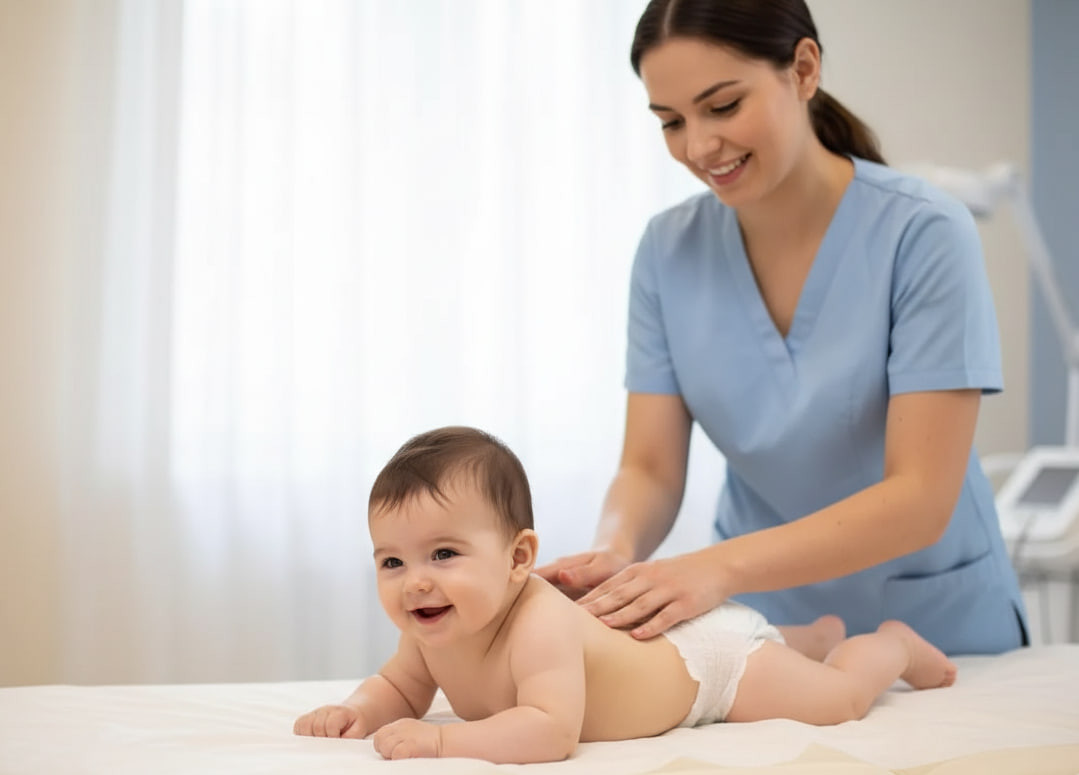
Indications and Contraindications for Infant Massage and Gymnastics
Indications and Contraindications for Massage and Gymnastics in Children
Massage and gymnastics play a key role in the formation of healthy motor skills in infants and young children. They help strengthen muscles, activate blood circulation, support the harmonious development of the nervous system, and improve interaction between the child and parents. At the same time, every intervention must take into account the individual characteristics of the child's body, their emotional state, and existing medical indications.
Correctly selected techniques can significantly improve the baby's well-being, reduce tension, and promote the formation of conscious movement skills. However, there are conditions in which manual intervention or physical exercises may be undesirable or even dangerous. That is why consultation with a specialist is mandatory before starting any early development program, and parents must clearly understand when massage is recommended and when it is better to postpone it.
Indications for Conducting Massage and Gymnastics
Before performing the manipulations, the specialist assesses the condition of the musculoskeletal system, the function of the nervous system, and the child's emotional reactivity. Massage and gymnastics are especially beneficial when the baby demonstrates uneven muscle tone, insufficient activity, tires quickly, or has difficulties in mastering age-appropriate motor skills. In such cases, dosed physical load helps prevent the formation of persistent posture and coordination disorders.
Regular sessions are also advisable when the child has functional disorders of the digestive system: frequent colic, abdominal bloating, or a tendency to constipation. Gentle abdominal massage and general relaxation techniques improve peristalsis, reduce discomfort, and contribute to calmer sleep. Indications may also include the consequences of perinatal damage to the nervous system, mild forms of muscular dystonia, delayed formation of support reactions, movement asymmetry, and congenital features in the formation of joints and feet.
- muscle tone disorders (hypotonus or hypertonus);
- delayed motor development — difficulties with rolling over, sitting, crawling, or standing;
- problems with gastrointestinal tract function: colic, bloating, sluggish bowel motility;
- torticollis, umbilical hernia, congenital features in joint formation;
- reduced activity and muscle weakness after infections or perinatal complications;
- need to strengthen movement coordination, the vestibular apparatus, and the bone frame.
In most cases, massage and simple exercises become an important part of a comprehensive rehabilitation, supplemented by observations from a pediatrician, neurologist, and orthopedist. This approach allows for gentle correction of deviations, support for the natural resources of the growing organism, and the creation of a reliable foundation for further physical development.
Contraindications for Infant Massage and Gymnastics
Despite the high benefit, there is a number of conditions under which physical influence on the child's body may worsen the course of the illness or cause complications. Contraindications include acute infections, elevated body temperature, general pronounced weakness, and any conditions accompanied by intense pain. In such situations, the body directs resources to fight inflammation, so additional load may become excessive stress.
Doctors are especially careful in assessing the condition of the cardiovascular and hematopoietic systems: in case of heart failure, hemorrhagic diatheses, uncontrolled bleeding, or severe heart defects, massage can provoke a deterioration in well-being. It is equally important to consider the condition of the skin: pustular rashes, fungal infections, allergic dermatitis, weeping areas, or large hernias make manipulations undesirable. In the case of neurological diseases with seizure syndrome, any intense physical stimuli may increase the risk of an attack, so the decision regarding LFK (Therapeutic Exercise) is made only after consultation with a specialized specialist.
- acute infectious processes and elevated body temperature;
- skin lesions, inflammation, pustular rashes, or fungal infections;
- epilepsy or seizure syndrome;
- pathological bleeding, hemophilia, hemorrhagic diathesis;
- large inguinal or umbilical hernias with risk of strangulation (incarceration);
- acute rickets, severe heart defects, circulatory disorders;
- severe pain, anxiety, or pronounced fatigue of the baby.
If the child has any chronic illness or is under the supervision of specialized specialists, the question of the possibility of massage is always coordinated with the doctor. This allows avoiding potential risks, adapting the program to the current state of health, and choosing the safest format for sessions. In case of doubt, it is better to postpone the procedure and consult a specialist again.
Assessment of Child Readiness for Massage in the «Graal» Clinic
Before starting work, the specialists of the «Graal» clinic conduct a detailed examination, which includes assessing tone, movement symmetry, reflexes, and joint function. This approach allows determining whether the child's body is ready for the load and selecting an individual program that does not stimulate overstrain.
Special attention is paid to the perinatal history: complicated delivery, hypoxia, or birth trauma may require a more cautious approach. Additionally, the baby's emotional background is evaluated — because safety and comfort are key conditions for effective therapy.
Safety Control During Procedures in «Graal»
In the «Graal» clinic, the entire process takes place under continuous medical supervision. Specialists monitor the child's reaction, adjust techniques, adapt the intensity of movements and the duration of the session. This ensures the most delicate and safe influence on the muscles and joints.
Each session is documented: progress, changes in the child's behavior, and reactions to the load are tracked. This approach allows avoiding overload, timely noticing any risks, and ensuring stable results of treatment or prevention.
FAQ (Frequently Asked Questions)
-
Can massage be performed with a mild runny nose?
A common runny nose may not be a contraindication, but before the session, the child's general well-being should be assessed and the pediatrician consulted.
-
How long does one course of massage last?
The course usually consists of 10–20 procedures, depending on the baby's condition, the goals set, and the doctor's recommendations.
-
Can massage be performed independently at home?
Parents are allowed to perform only gentle techniques after training with a specialist, to avoid the risk of injury or overloading the child.
Зареєструйтесь онлайн перед приїздом.