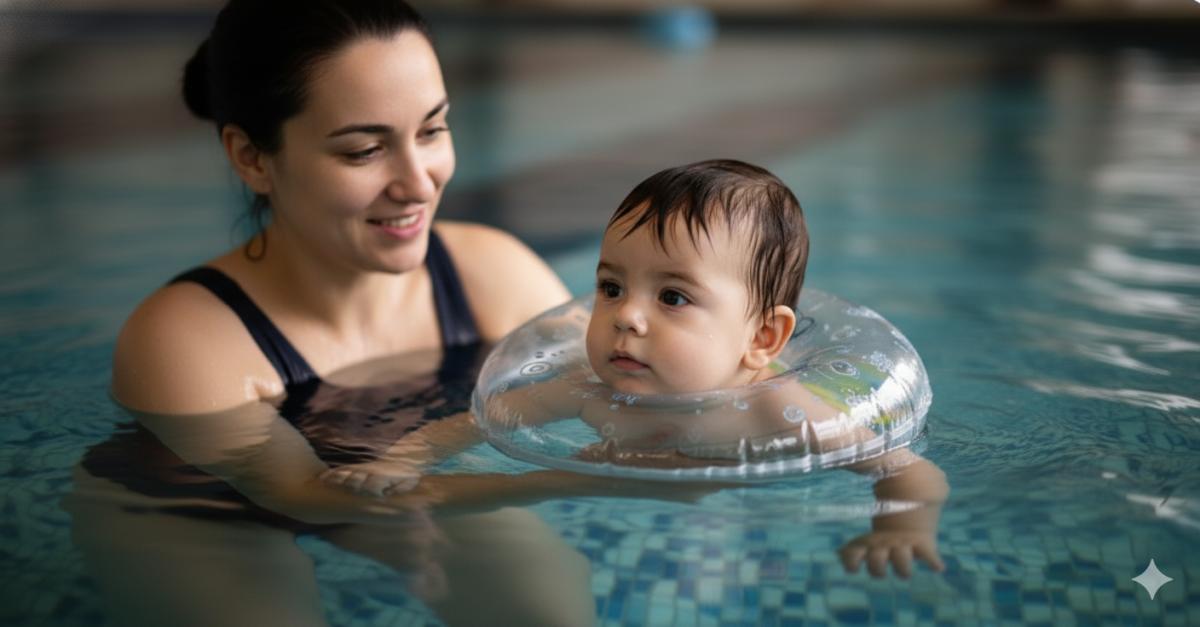
Infant Swimming
Infant Swimming: A Natural Path to Development and Gentle Rehabilitation
Infant swimming is not just a health activity, but an important part of early developmental stimulation that combines physical, sensory, and emotional influences. Since a newborn child enters the world with the experience of being in a liquid environment, water remains the most natural element for them. That is why the first water sessions help harmonize adaptation, support the formation of the nervous system, and contribute to motor development.
In warm water, the infant experiences less resistance and can perform a wider range of movements than on land. This gently strengthens the muscles, activates coordination, and improves the functioning of the cardiovascular system. The gradual load does not create excessive stress, unlike rigorous land exercises, which makes the aquatic environment ideal for infants in the first months of life.
The prophylactic effect is also of particular importance: swimming improves intestinal peristalsis, reduces the frequency of colic, promotes better sleep, and stabilizes the child's emotional state. The infant learns to control movements, better feels their own body, and receives positive emotions, which is an important part of overall development.
When Infant Swimming is Especially Beneficial
Water therapy is suitable for most children, but in specific cases, it has a particularly pronounced therapeutic effect. In such situations, sessions are aimed at gentle tone correction, normalization of movement patterns, and reduction of sensory hypersensitivity.
- hypertonia or hypotonia of varying degrees;
- torticollis and impaired symmetry of movements;
- neurological peculiarities and developmental delay;
- autism and sensory disorders;
- Cerebral Palsy (as part of a comprehensive rehabilitation program);
- problems with falling asleep, frequent agitation, excessive tension.
Swimming is an effective element of rehabilitation due to the combination of motor activity with simultaneous tactile, thermal, and vestibular influence. This stimulates the development of brain structures responsible for movement control, coordination, balance, and sensory integration.
Advantages of the Aquatic Environment for Infants
During the sessions, the child masters skills that will later become the basis for crawling and walking. Water provides a unique opportunity to move freely because it partially supports the body, and the muscles work more rhythmically and balancedly. Therefore, regular sessions help avoid many problems associated with muscle imbalance or weakness.
- regulation of muscle tone;
- development of coordination and correct motor patterns;
- improvement of pulmonary ventilation;
- activation of blood circulation and tissue nutrition;
- stimulation of sensory integration;
- hardening and strengthening of immunity.
Water also contributes to the relaxation of the nervous system. The infant becomes calmer, reacts better to stimuli, and adapts more easily to changes in the environment. This effect is especially valuable for children who are prone to overexcitation or anxious reactions.
Rehabilitation Aquatic Methods at the «Graal» Clinic
At the «Graal» clinic, aquatic rehabilitation is developed individually for each child. Before starting, specialists conduct a detailed assessment of the state of the nervous system, muscle tone, and motor development to determine the optimal load level. Following this, a program is compiled that includes a set of safe exercises aimed at enhancing muscle stability, developing balance, and forming correct motor activity.
The methods used at «Graal» do not involve sudden movements or stressful techniques. Therapists use only gentle, evidence-based approaches focused on the child's natural abilities. This allows for correcting asymmetry, improving coordination, reducing hypertonia, and supporting the development of brain structures responsible for motor control.
Great attention is paid to safety: water temperature, depth, session duration, and rhythm are changed depending on the infant's age and reactions. Thanks to this approach, the child does not become over-tired, and the rehabilitation process occurs naturally and comfortably.
Family-Centered Approach to Infant Swimming at «Graal»
At the «Graal» clinic, they are convinced that parents are the central support in the process of early rehabilitation. That is why they are actively involved in the sessions, learn safe support techniques, and observe the infant's reactions. This builds trust, reduces anxiety levels, and creates an emotionally stable space for the child.
Clinic specialists explain in detail how to correctly immerse the baby in the water, which signals indicate fatigue, how to react to emotions, and what should be taken into account during home water procedures. Parents receive clear recommendations regarding the rhythm of sessions, temperature regime, and gentle stimulation techniques.
This family format contributes to strengthening the emotional bond between adults and the child, and also allows therapeutic skills to be transferred to familiar home conditions. This not only improves the result but also helps maintain stable positive changes in development.
FAQ (Frequently Asked Questions)
-
When is the best time to start sessions?
After the umbilical wound has completely healed — approximately from 3–4 weeks, if there are no contraindications.
-
Is swimming suitable for children with hypertonia?
Yes. In water, tense muscles relax faster, and under the specialist's supervision, movements become more harmonious.
-
How long does one session last?
For the youngest — 10–15 minutes. The duration increases with age, but depends on the baby's reactions.
-
Why is the presence of parents necessary?
Parental participation reduces stress and accelerates adaptation. At «Graal», this is an obligatory part of the approach.
-
What to do if the child cries?
Crying does not always mean discomfort, but with severe or prolonged anxiety, the session is adjusted or postponed.
Зареєструйтесь онлайн перед приїздом.