Consequences of Spinal Injuries
Spinal Injuries: Causes, Classification, Symptoms and Recovery Options
The spine is the central supporting structure of the body, responsible for mobility, stability, and the proper functioning of the nervous system and internal organs. Any damage to it can lead to consequences far beyond localized pain. Even minor strain may affect nerve roots or muscle groups, while severe injuries can impair spinal cord function. This is why spinal injuries require thorough diagnostics, early intervention, and professional rehabilitation.
The risk of injury changes throughout life. In younger patients it is usually associated with sports or traffic accidents, while in older adults it is primarily due to age-related changes: reduced bone density, weakened ligaments, and degenerative processes. Because of this, even normal everyday movement may result in a compression fracture.
Why do spinal injuries occur?
An injury may occur suddenly or develop gradually. Its mechanism depends on lifestyle, bone condition, physical activity, and external factors. The most common causes include:
- Household falls. Slippery floors, uneven surfaces or falling from a chair or stairs commonly result in bruises and fractures, especially in older adults.
- Sports injuries. Poor technique, abrupt movements or collision with another athlete may lead to vertebral displacement or ligament sprains.
- Road accidents. Sudden braking or impact creates excessive load on the cervical and thoracic spine.
- Work-related injuries. Falling objects, overloading or violation of safety rules are common risk factors.
- Intentional trauma or violence. Injuries sustained during conflicts often combine fractures and dislocations.
Osteoporosis deserves special attention: reduced bone density makes the vertebrae so fragile that a fracture may occur even during bending or lifting a light object.
Types of spinal injuries
Spinal injuries vary greatly in severity. Some affect only soft tissues, while others compromise the stability of bone structures or even the integrity of the spinal cord. The most common types include:
Soft-tissue injuries. Bruises, swelling, muscle or ligament strain. These are painful but usually do not affect spinal stability.
Segment instability. Dislocations and subluxations occur when joint surfaces of the vertebrae shift, posing a risk of nerve compression.
Vertebral fractures. Compression, comminuted or combined fractures may occur at any spinal level. The degree of damage determines the extent of motor and sensory impairment.
Combined vertebral-spinal cord injuries. The most severe type, involving simultaneous damage to bone and neural structures.
The cervical spine is particularly vulnerable due to its mobility, while the lumbar spine is most commonly affected by compression fractures caused by vertical loading.
How do spinal injuries manifest?
Symptoms vary widely, from mild discomfort to severe neurological impairment. An injury does not always cause immediate sharp pain, so it is important to recognize key signs:
- local pain intensified by movement or pressure;
- limited mobility and stiffness;
- numbness or tingling in limbs;
- muscle spasms;
- gait instability;
- pelvic organ dysfunction in severe cases;
- with cervical injuries — dizziness, occipital pain, head pressure.
Lower back injuries may not cause acute pain immediately, but over time can lead to «shooting» pain or functional limitations.
Consequences of spinal injuries
Even after the acute phase, patients may experience persistent discomfort, pain and functional limitations. Long-term consequences depend largely on the timeliness of treatment and rehabilitation. The most common include:
- Chronic back pain and recurrent flare-ups.
- Reduced flexibility, movement stiffness.
- Spinal deformities — kyphosis, scoliosis or mixed variants.
- Muscle weakness and atrophy due to prolonged immobility.
- Neurological deficits: paresis, sensory loss in affected areas.
- Organ dysfunction in severe spinal cord injury.
- Psycho-emotional consequences — anxiety, apathy, low motivation, social isolation.
In severe cases, a spinal injury may lead to partial or complete loss of mobility and self-care ability. Therefore, rehabilitation must address both medical and psychosocial aspects.
Treatment and rehabilitation principles
Treatment is always individualized. Mild injuries are managed conservatively: reduced activity, pain relief, anti-inflammatory therapy, physiotherapy and therapeutic exercise. Severe fractures, significant dislocations or instability may require surgery to stabilize the segment or decompress neural structures.
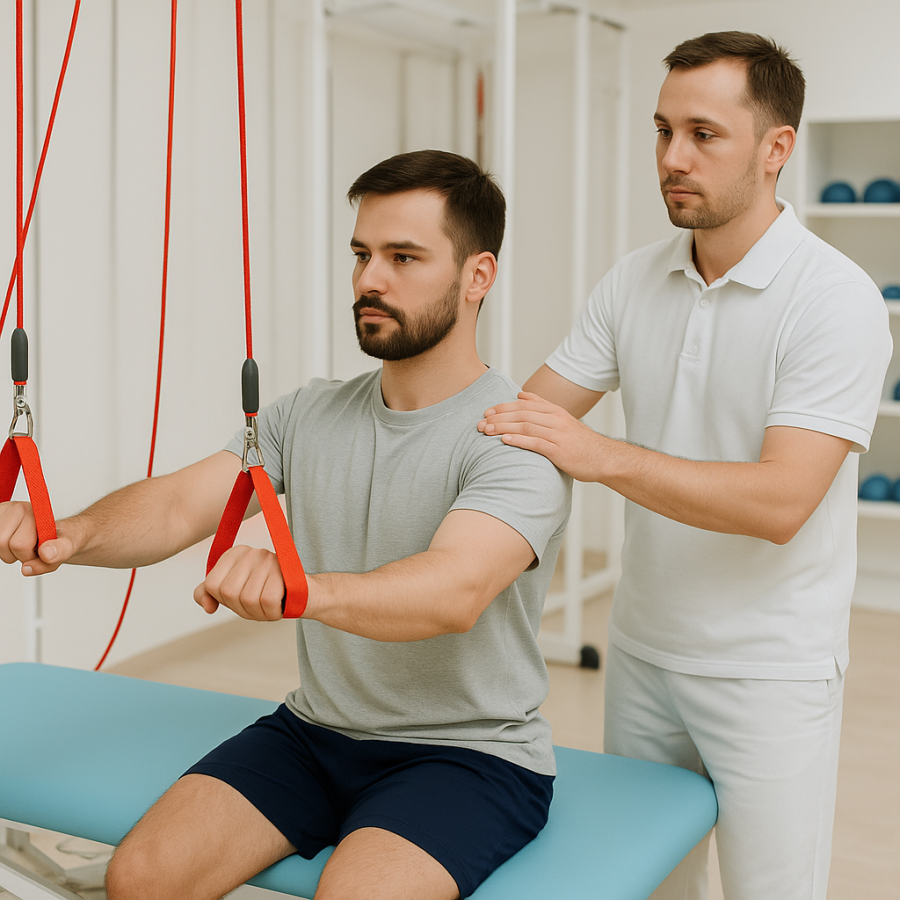
Rehabilitation begins as soon as the patient’s condition stabilizes. It includes exercises to restore mobility, strengthen the muscle corset, normalize posture and improve coordination. A rehabilitation specialist, physiotherapist and, if necessary, psychologist play an essential role, as chronic pain and restricted mobility significantly affect emotional well-being.
FAQ
-
Do all spinal injuries lead to spinal cord damage?
No. Some injuries affect only bones or soft tissues. However, even in the absence of obvious signs, examination is necessary to exclude hidden compression of nerve roots.
-
Which symptoms require immediate medical attention?
Severe back pain, sudden limb weakness or numbness, gait disturbance, breathing difficulties, loss of bladder or bowel control — all require urgent medical attention.
-
Is full recovery possible after a severe spinal injury?
It depends on the level and type of the injury. Many patients achieve significant improvement with timely surgery and rehabilitation, but some neurological deficits may remain.
-
How long can rehabilitation take?
Mild injuries may heal within a few weeks. Complex fractures and spinal cord injuries may require months or even years of rehabilitation with continuous monitoring.
Зареєструйтесь онлайн перед приїздом.