Electrical
What is electrostimulation and how it affects the body
Electrostimulation is a method of physiotherapeutic treatment in which special electrical impulses act on muscles and nerve fibers. They imitate the body's natural signals, thanks to which activation of nerve pathways, muscle contractions and reduction of pain sensations occur. The method has been used for more than half a century and is considered safe, non-invasive and effective both in treatment and in rehabilitation after injuries or neurological disorders.
Under the influence of electric current, microcirculation improves, metabolic processes are activated, swelling decreases and tissue recovery accelerates. Therefore, electrostimulation is often used in complex therapy — together with drug treatment or other physiotherapeutic methods.
Methods of electrostimulation: how the treatment mode is chosen
Several types of electrical current of different frequency are used in physiotherapy. Each technique has its own indications and strength of influence, so the correct choice of mode is critical for achieving a therapeutic result.
- Diadynamic currents. Reduce spasm, stimulate blood supply and accelerate recovery after injuries.
- Interference stimulation. Effectively blocks pain impulses, providing a prolonged analgesic effect.
- TENS currents. Are used mainly for the control of chronic and acute pain.
- Galvanic therapy and iontophoresis. Allow medications to be administered through the skin using direct current.
- Transcranial stimulation. Increases the production of serotonin and endorphins, affects mood and pain sensitivity.
Each type of electrical current affects the nervous and muscular systems in a different way, so the technique is applied individually, taking into account the localization of the problem, the patient’s age and clinical manifestations.
Personalized electrostimulation protocols at the «Graal» clinic
At the «Graal» clinic, electrostimulation is not performed according to general templates. The physiotherapist forms an exact treatment protocol based on diagnostics, the clinical condition of tissues and neurological manifestations. Specialists take into account muscle tone, the strength of pain, the severity of inflammation and the level of innervation of a specific area.
For each patient, the optimal frequency, amplitude and duration of impulses are selected. Thanks to this approach, treatment becomes as effective as possible in muscle weakness, degenerative changes, injuries, neuritis and circulatory disorders.
- individual testing of muscle reactions;
- control of tissue tolerance to current;
- adaptation of parameters in the course of therapy.
This personalized approach helps to achieve faster recovery and minimizes the risk of undesirable reactions.
How the electrostimulation procedure takes place
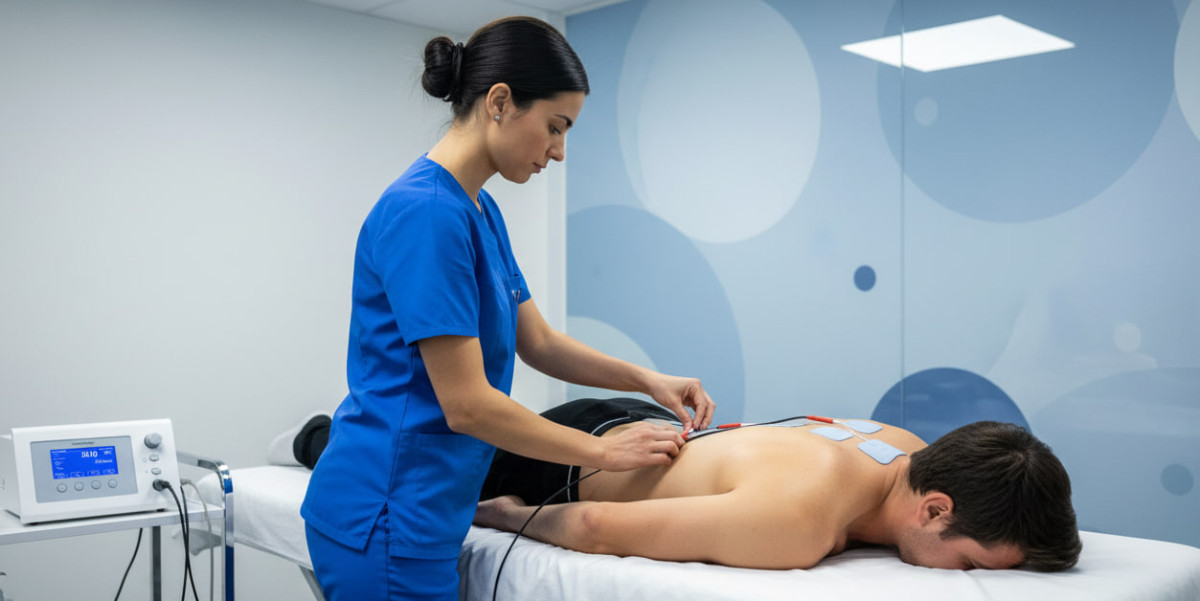
Before the procedure, the doctor assesses the condition of the skin and determines the optimal zones for placing the electrodes. They are placed on a pre-moistened surface to improve electrical conductivity. The patient is positioned sitting or lying — depending on the localization of the problem area.
The current strength is increased gradually: at first a slight tingling appears, after which soft muscle contractions become noticeable. The duration of the session is on average 10–20 minutes, and the course usually includes from 8 to 15 procedures.
Control of muscle response during electrostimulation at the «Graal» clinic
One of the key advantages of the «Graal» clinic is constant monitoring of the reactions of the muscular system during the session. This makes it possible to optimize the effect and avoid excessive stimulation. The physiotherapist analyses the strength and rhythmicity of contractions, the symmetry of the response and the speed of tissue relaxation.
If necessary, the current parameters are adjusted in real time. This approach is especially important in the treatment of patients after injuries, in pareses, neuropathies or with pronounced muscle weakness.
Thanks to accurate control of the muscle response, maximum effectiveness is achieved, and the rehabilitation result becomes more stable.
Indications and contraindications for electrostimulation
Electrostimulation is used in a wide range of diseases of the musculoskeletal system, neurological disorders and conditions associated with reduced muscle tone.
Indications
- neuralgia and degenerative joint changes;
- muscle weakness, pareses and paralyses;
- circulatory disorders and scoliosis;
- recovery after loads and operations;
- chronic and acute pain, inflammatory processes;
- impaired tissue trophics.
Contraindications
- pacemaker and metal implants;
- malignant tumours;
- epilepsy and severe arrhythmias;
- infections, high temperature;
- skin lesions in the electrode application area;
- pregnancy.
FAQ (Frequently Asked Questions)
-
Is the electrostimulation procedure painful?
Most patients feel only slight tingling and rhythmic muscle contractions. The procedure is not painful and is generally well tolerated.
-
How long does the treatment course last?
On average, 8–15 procedures are needed, depending on the clinical situation and the individual muscle response.
-
Can electrostimulation be combined with other methods?
Yes, the method is effectively combined with massage, kinesiotherapy, drug treatment and other physiotherapy procedures.
Зареєструйтесь онлайн перед приїздом.