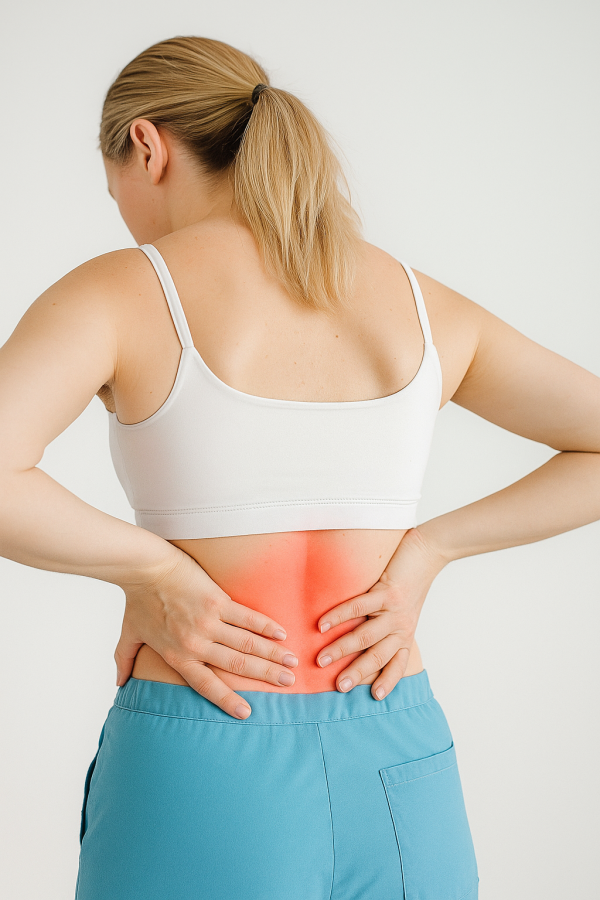
Intervertebral Disc Protrusions
Intervertebral Disc Protrusions: What They Are
A protrusion of an intervertebral disc is an early stage of degenerative spinal change in which the disc bulges beyond its normal anatomical boundaries, while the fibrous ring remains intact. At this stage, the disc structure is already significantly weakened, its elasticity is reduced, and the bulging may compress nerve roots and trigger pain. Without timely intervention, a protrusion often progresses to a full intervertebral hernia.
Most often, protrusions are detected in the lumbar spine, which carries the main load during walking, lifting weights and prolonged sitting. The cervical region is affected somewhat less frequently, but even minor changes there can significantly impact well-being due to the proximity of vessels and nerves supplying the brain. The thoracic region is involved more rarely, yet its symptoms may mimic heart or lung disease.
Specialists at Graal Clinic emphasize that a protrusion is not a final verdict but a warning that the spine needs attention. With early consultation it is usually possible to halt progression, reduce pain and restore spinal function without surgery.
Causes and Risk Factors of Disc Protrusions
The development of a protrusion is the result of a combination of external and internal factors. Degenerative processes form gradually: initially, the disc loses water and becomes less elastic, then its height decreases and, under load, it begins to shift beyond the intervertebral space.
External risk factors
- frequent or single spinal injuries (falls, blows, sudden movements);
- excessive physical load, heavy lifting, work associated with back strain;
- prolonged static posture — office work at a computer, driving, standing without movement;
- hypothermia and extreme temperature exposure affecting muscles and ligaments;
- consequences of infectious processes that weaken connective tissue.
Internal causes
- metabolic disorders and obesity;
- endocrine and vascular problems that impair disc nutrition;
- diseases of the central, peripheral and autonomic nervous systems;
- genetic predisposition to connective tissue weakness and degenerative spinal disorders;
- chronic posture disorders, scoliosis and improper movement patterns.
When creating an individual treatment plan, doctors at Graal Clinic always take into account this combination of factors: lifestyle, occupational specifics, comorbidities, age and the patient’s level of physical activity.
Symptoms of Protrusions in Different Spine Regions
The clinical presentation depends on which spinal region is affected and how pronounced the bulging is. The main mechanisms of symptoms are mechanical compression of nerve roots, muscle spasm and impaired microcirculation in the affected area.
Lumbar spine
- localized low back pain radiating to the buttock, thigh or lower leg;
- sense of weakness in the legs, rapid fatigue while walking;
- tingling, «pins and needles», numbness in the lower limbs;
- in severe cases — urinary disturbances and impaired pelvic control.
Thoracic spine
- pain along the thoracic spine, especially during movement or deep breathing;
- discomfort between the shoulder blades, a feeling of tightness in the chest;
- episodic numbness of limited areas of the chest wall.
Cervical spine
- neck pain aggravated by head turns and tilts;
- headaches, dizziness, tinnitus;
- numbness and tingling in the shoulders, forearms and hands;
- reduced neck mobility and a feeling of muscle stiffness.
If you notice several of these symptoms together, doctors at Graal Clinic recommend not postponing a consultation. Early diagnostics allows protrusions to be identified before they cause irreversible changes or develop into herniated discs.
Diagnostics, Treatment and Rehabilitation at Graal Clinic
Modern imaging methods are used to confirm the presence of a protrusion and to assess its size. Magnetic resonance imaging (MRI) is considered the gold standard, as it allows detailed visualization of intervertebral discs, neural structures and surrounding soft tissues. At Graal Clinic, examinations are performed according to individual indications and interpreted by experienced neurologists and spine specialists.
Comprehensive treatment of protrusions at Graal Clinic includes:
- medication therapy to relieve pain and inflammation (non-steroidal anti-inflammatory drugs, muscle relaxants, agents that improve blood flow);
- physiotherapy techniques (magnetotherapy, electrical stimulation, ultrasound, thermal procedures);
- therapeutic exercise and kinesiotherapy to strengthen the muscular corset and stabilize the spine;
- manual therapy, massage and gentle correction techniques aimed at reducing muscle spasm and improving mobility;
- decompression methods (spinal traction) used, when indicated, to reduce pressure on nerve roots.
Each patient at Graal Clinic receives an individualized rehabilitation plan that reflects protrusion location, symptom severity, age, physical fitness and coexisting conditions. This approach not only relieves pain but also helps patients return to an active lifestyle and decreases the risk of recurrence.
FAQ
-
Does every protrusion require surgery?
No. In most cases, if addressed early, protrusions can be effectively managed using conservative methods. Surgery is considered only in cases of severe neurological deficit or failure of conservative therapy.
-
When is MRI necessary?
MRI is recommended for persistent back pain, pain radiating into a limb, numbness, muscle weakness or suspected disc herniation. At Graal Clinic, the indication for MRI is determined by a doctor after a thorough examination.
-
Can I do sports if I have a disc protrusion?
Physical activity is not prohibited, but it must be carefully dosed and selected by a specialist. Doctors and rehabilitation therapists at Graal Clinic help choose safe types of activity and an appropriate exercise program.
-
How long does rehabilitation take?
The duration of rehabilitation depends on the severity of disc damage, the patient’s age and comorbidities. On average, the active phase takes from several weeks to a few months, followed by a maintenance program.
-
When should I contact Graal Clinic?
You should seek help at Graal Clinic if you experience persistent pain in the back, neck or thoracic region, numbness or weakness in the limbs, restricted movement, or if a protrusion or herniated disc is suspected. Early diagnosis significantly improves treatment outcomes.
Зареєструйтесь онлайн перед приїздом.