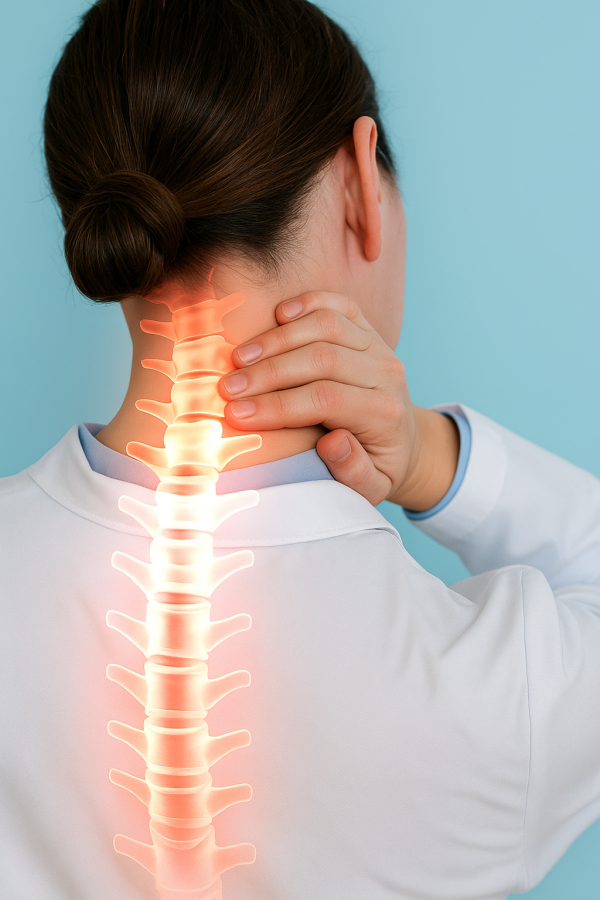
Osteochondrosis
What Osteochondrosis Is and Why It Develops
Osteochondrosis is a group of degenerative and dystrophic changes in the spine that lead to the gradual destruction of intervertebral discs, joint surfaces, ligaments and muscle structures. The condition does not appear suddenly — it progresses due to impaired tissue nutrition, metabolic disorders and chronic overload. With age, the discs lose elasticity and stability, and surrounding structures respond with pain, spasms and inflammation.
Osteochondrosis may develop in the cervical, thoracic or lumbar spine. It often leads to reflex and compression syndromes, affecting internal organs, limbs and even cardiovascular and respiratory systems. For this reason, many patients mistake its symptoms for heart conditions, gastrointestinal diseases or neurological disorders.
It is important to note that osteochondrosis is not a single disease — it is a complex of disorders caused by lifestyle, trauma, genetic factors and age-related changes.
Main Symptoms of Osteochondrosis
Clinical manifestations vary depending on the affected spinal section, but many symptoms are common. Their intensity ranges from mild discomfort to severe mobility-limiting pain.
- aching or sharp pain in the neck, lower back or between the shoulder blades;
- restricted mobility, stiffness, muscle tightness;
- dizziness, visual dimming, tinnitus;
- numbness, tingling or burning in arms or legs;
- headaches triggered by head movements;
- urinary dysfunction or leg numbness in lumbar involvement;
- «goosebumps», altered skin sensitivity;
- chest pain mimicking cardiac issues.
If several symptoms appear simultaneously, a neurological examination is strongly recommended. Early diagnosis significantly improves treatment outcomes.
Why Osteochondrosis Occurs: Key Risk Factors
Osteochondrosis develops under the influence of multiple factors that accelerate spinal wear. Some are lifestyle-related, others genetic or age-related.
Major Contributing Factors
- sedentary lifestyle, prolonged sitting or standing;
- frequent lifting or intense physical activity;
- excess body weight;
- posture disorders, scoliosis, flat feet;
- hereditary predisposition;
- spinal injuries, falls, impacts;
- chronic stress and muscle spasms.
Osteochondrosis affects men and women equally and is increasingly diagnosed in adolescents due to low activity and improper sitting habits.
Stages of Progression
- Initial stage: early loss of elasticity, mild discomfort.
- Second stage: reduced disc height, pain, inflammation.
- Third stage: protrusions and herniation, limited mobility.
- Fourth stage: irreversible deformities, disability.
Involvement of Different Spine Sections
The symptoms differ depending on the affected area. Each form has characteristic features.
Lumbar Osteochondrosis
- lower back pain aggravated by bending or lifting;
- weakness or numbness in legs;
- urinary disturbances due to nerve compression;
- risk of herniation, sciatica and paresis.
Cervical Osteochondrosis
- dizziness and tinnitus;
- pain in the neck and shoulders;
- floaters, visual disturbances;
- headaches and hand numbness.
Thoracic Osteochondrosis
- pain in the chest and between the shoulder blades;
- breathing difficulty, chest tightness;
- stiffness when raising arms.
Diagnosis and Treatment of Osteochondrosis
Effective therapy requires comprehensive diagnostics, including laboratory tests and imaging techniques:
- MRI — assessment of discs, nerves and soft tissues;
- CT — detection of deformities and protrusions;
- X-ray — evaluation of spinal alignment;
- Ultrasound of vessels — if blood flow impairment is suspected.
Treatment is always multifaceted: medication, physiotherapy, therapeutic exercise, massage and manual therapy. Surgery is necessary only in severe cases.
Key Treatment Approaches
- anti-inflammatory drugs and muscle relaxants;
- physiotherapy procedures;
- muscle and joint rehabilitation;
- lifestyle modification and therapeutic exercise.
FAQ
-
Can osteochondrosis be cured completely?
It is impossible to fully restore discs, but symptoms can be eliminated and progression can be stopped.
-
When should I see a doctor urgently?
If severe pain, numbness, movement impairment or urinary issues occur, immediate evaluation is required.
-
Does physical therapy help?
Yes, regular therapeutic exercises strengthen the back and reduce pain.
-
Is self-treatment safe?
No, osteochondrosis requires individualized medical supervision.
Зареєструйтесь онлайн перед приїздом.