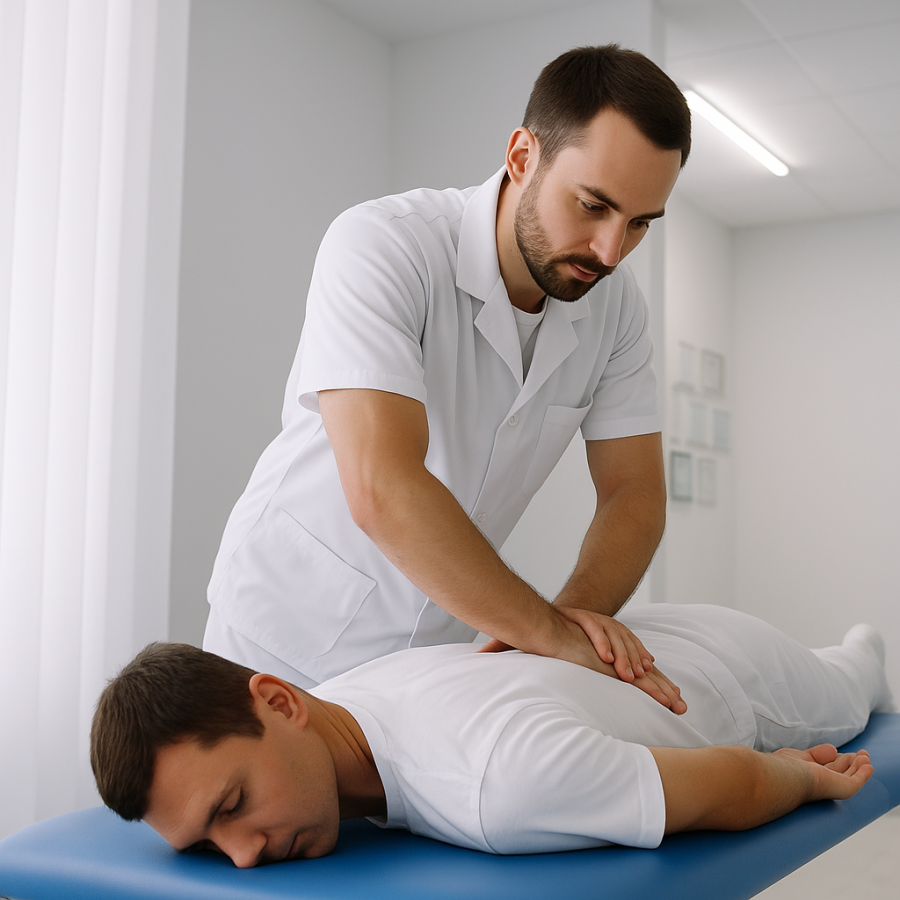
Therapeutic Massage
Therapeutic Massage: influence, principles, and role in recovery
Therapeutic massage is a purposeful manual method that helps normalize muscle function, improve blood circulation, reduce tension, and accelerate the recovery of the organism. Unlike wellness techniques, it has a clear therapeutic purpose and is applied for the correction of functional disorders, rehabilitation after traumas, and work with chronic pain states. Regular sessions contribute to stress reduction, restoration of the balance of the vegetative nervous system, and improvement of joint mobility.
The basis of effective massage is the combination of several techniques and sequential methods. It is the combination of stroking (effleurage), kneading (petrissage), pressing, vibrations, and rubbing (friction) that allows influencing both superficial tissues and deep muscle layers. The methodology is selected individually depending on the patient's condition, existing diseases, pain level, and concomitant symptoms.
Main varieties and techniques of therapeutic massage
Massage techniques differ by the force of influence, depth of treatment, and therapeutic goals. In the basic set of techniques, the following are distinguished:
- Stroking (Effleurage). Helps prepare tissues, reduce surface tension, and activate lymph flow.
- Rubbing (Friction). Improves blood supply, warms up muscles, and increases their elasticity.
- Kneading (Pétrissage). Used for deep influence on muscle fibers and reduction of spasms.
- Vibrations. Contribute to the normalization of tone, reduction of pain impulses, and stimulation of nerve endings.
- Patting and percussive techniques. Tone tissues and activate local blood circulation.
For recovery after traumas or prolonged static loads, combined schemes are often applied with an accent on muscle spasms, posture disorders, or local painful zones.
When Therapeutic Massage is Especially Effective
Manual techniques are widely used for functional disorders of the musculoskeletal system and the nervous system. They are recommended in cases of:
- cervical and lumbar pains caused by muscle spasm or overstrain;
- intervertebral hernias, protrusions, consequences of osteochondrosis;
- tension headaches and migrainous manifestations;
- post-traumatic states: fractures, traumatic brain injuries (TBI), back traumas;
- recovery after operations or periods of prolonged immobilization;
- states of overfatigue, stress, sleep disorders, and vegetative dysfunctions.
Massage also supports regenerative processes, relieves muscle clamps (tension), improves lymph circulation, and contributes to the strengthening of the immune system.
Massage Techniques Applied in «Graal»
Specialists of the «Graal» clinic combine modern rehabilitation approaches with classical massage methodologies. In their work, they use myofascial techniques, segmental techniques, point massage (acupressure), and soft tissue methods of influence for deep treatment of muscle structures. Such an approach allows accurately adapting the procedure to the patient's needs and achieving a noticeable therapeutic effect already after a few sessions.
In the case of chronic pain or post-traumatic changes, deeper techniques are applied, aimed at reducing spasms, normalizing tone, and improving mobility. For vegetative disorders and stress states, preference is given to relaxing methods that stabilize the nervous system and improve sleep.
Assessment Before Therapeutic Massage in «Graal»
Before prescribing massage, the specialists of «Graal» conduct an individual assessment of the patient's condition. This allows determining muscle dysfunctions, clarifying the source of pain, excluding contraindications, and selecting the optimal intensity of influence. Such an approach guarantees the safety of the procedure and ensures its maximal effectiveness.
The examination may include posture assessment, joint mobility testing, palpation of tense areas, and, if necessary, additional recommendations from a neurologist or rehabilitation specialist. Based on this data, a personalized work plan is drawn up.
Advantages of Therapeutic Massage for the Nervous and Musculoskeletal System
A correctly selected course of massage positively influences the nervous system, contributes to the reduction of anxiety levels, and the normalization of sleep. In patients, muscle spasm is reduced, coordination of movements and general endurance are improved. In many cases, massage helps reduce the frequency of acute pain episodes and improve the quality of life in chronic diseases.
For people who have undergone traumas or surgical interventions, massage often becomes a key element of recovery, as it improves the trophism of tissues, accelerates regeneration, and restores motor functions. Its application in combination with LFK (Therapeutic Exercise), physiotherapy, and kinesiotherapy ensures a stable therapeutic result.
FAQ (Frequently Asked Questions)
-
Can massage replace treatment?
Massage is an important part of therapy, but it cannot replace full-fledged treatment for complex or acute states. It is applied as an auxiliary and rehabilitation method.
-
How many sessions are needed for a result?
Usually the first changes are noticeable after 2–3 procedures. A full course is determined individually depending on the problem.
-
Is preparation required before massage?
Special preparation is not required, but it is desirable to inform the specialist about concomitant diseases and previous traumas.
-
Does massage have contraindications?
Yes. Acute infections, high temperature, active inflammatory processes, and certain cardiovascular conditions are reasons for temporary refusal of the procedure.
Зареєструйтесь онлайн перед приїздом.