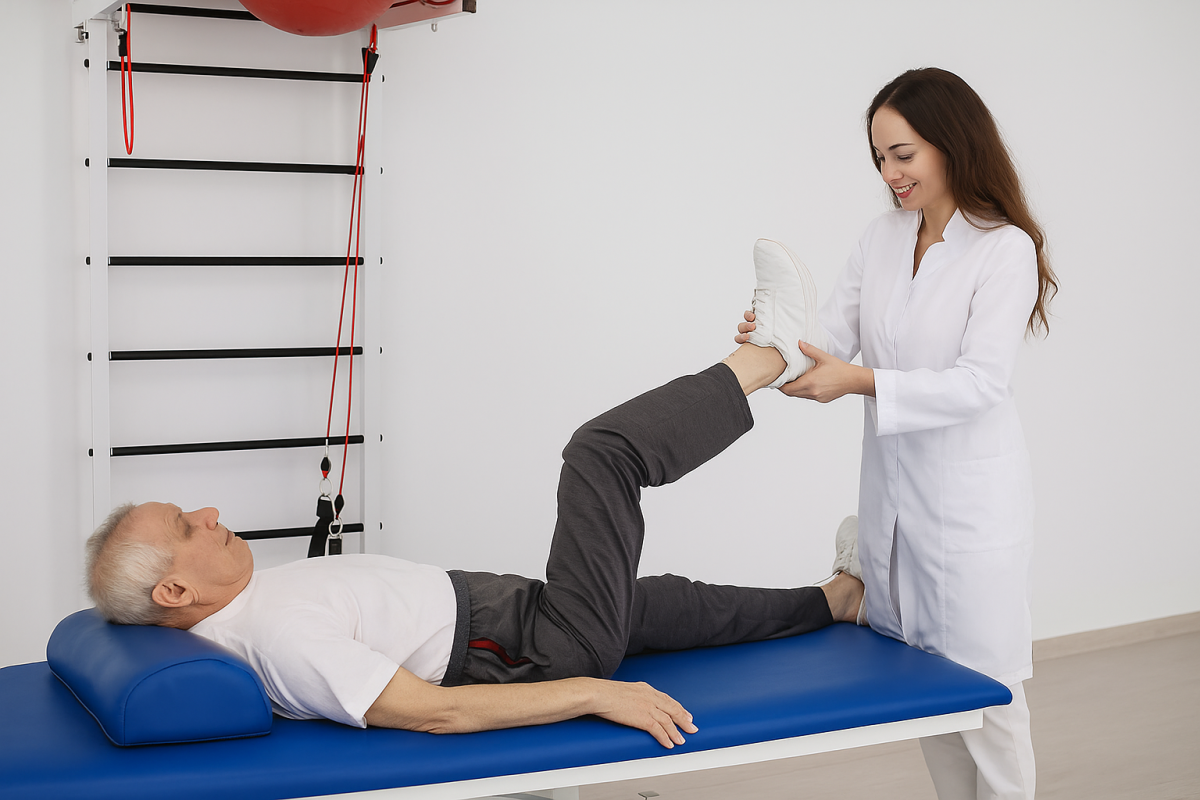
Rehabilitation after hip fracture
Hip Fracture Rehabilitation — Step by Step Recovery
A hip neck fracture is one of the most serious injuries of the musculoskeletal system, especially among elderly people. Such trauma often leads to loss of mobility and independence, so early and professional rehabilitation is crucial. At the «Graal» clinic, a comprehensive recovery program has been developed that combines physical therapy, kinesiotherapy, hydrorehabilitation, massage, and practical training in safe daily movements.
Causes and Risks of Hip Fracture
Most hip fractures occur as a result of a fall or loss of balance in people with age-related bone changes. Osteoporosis, hormonal disorders, and calcium deficiency make bones more fragile. In elderly patients, even a minor fall can cause serious injury, so prevention and timely treatment are key.
Rehabilitation Goals
The main goal is to restore balance, walking ability, and independence. Comprehensive rehabilitation after a hip fracture at the «Graal» clinic is carried out in several stages and aims to:
- reduce pain and inflammation;
- restore muscle strength in the hip and pelvic area;
- prevent complications — bedsores, thrombosis, contractures;
- gradually restore gait and balance;
- provide psychological support and adaptation to new living conditions.
Special attention is given to creating a safe environment for recovery. Patients are taught how to sit, stand, use crutches, and perform hygiene routines without risk of injury. The rehabilitation specialist helps adapt the home setting — adjusting bed height, installing grab bars in the bathroom, selecting comfortable shoes and mobility aids. This approach helps prevent repeated falls and promotes a faster return to independence in everyday life.
Stages of Recovery After Hip Fracture
1. Early Inpatient Stage
It begins 24–48 hours after surgery or once the patient’s condition is stabilized. Under the supervision of a physiotherapist, patients perform simple isometric exercises — tightening the thigh and gluteal muscles without movement. Gradually, breathing exercises, light massage, and prevention of complications (such as thrombosis or bedsores) are introduced. The goal at this stage is to support circulation and prepare the body for standing and walking.
2. Active Rehabilitation Stage
After discharge, patients move to intensive rehabilitation at the clinic. The program includes:
- exercises to restore hip joint mobility;
- balance and coordination training;
- kinesiotherapy sessions for muscle strengthening;
- hydrotherapy in the pool for safe gait recovery;
- massage and physiotherapy to reduce pain and swelling.
During this phase, patients gradually transition from assistive devices (crutches, walkers) to independent walking. They learn correct techniques for sitting, standing, and walking to avoid overloading the joint.
3. Home or Outpatient Stage
After completing the clinic course, patients continue exercises at home under supervision or through regular visits to a physiotherapist. It is recommended to maintain muscle tone through walking, swimming, or cycling. Posture control, breathing exercises, and fall prevention remain important at this stage.
Common Complications After Hip Fracture
Without proper rehabilitation, patients may experience severe complications such as circulatory disorders, muscle atrophy, joint contractures, thromboembolism, bedsores, and chronic pain. Therefore, specialists at the «Graal» clinic emphasize early movement therapy and an individualized approach for each patient.
Modern Rehabilitation Methods at «Graal»
- Kinesiotherapy. Exercises on specialized equipment with gradually increasing load.
- Hydrotherapy. Water-based exercises reduce joint stress and promote painless movement recovery.
- Physiotherapy. Use of electrostimulation, magnetotherapy, and laser therapy to accelerate healing.
- Massage and Manual Techniques. Relieve tension, improve circulation, and support relaxation.
- Psychological Support. Helps patients overcome fear of movement and regain confidence after trauma.
Rehabilitation Results
Comprehensive rehabilitation after a hip fracture enables visible progress within several weeks. Patients report reduced pain, improved coordination, and increased confidence in movement. Gradually, independence in everyday activities is restored, and overall quality of life significantly improves.
FAQ
When can rehabilitation begin after surgery?
Usually 24–48 hours after stabilization, under medical supervision.
Can I exercise at home?
Yes, but only after consulting a physiotherapist who will design a safe program according to your recovery stage.
When can I stop using crutches?
It depends on the fracture type and healing progress, typically after 8–12 weeks.
Does pool therapy help?
Yes, water exercises significantly reduce joint strain and speed up mobility recovery.
Зареєструйтесь онлайн перед приїздом.